

Table of Contents
- Why Remote Management Requires a Different Approach
- Remote Management Best Practices for Building Trust
- Step 1: Establish Clear Expectations and Goals
- Step 2: Master Asynchronous Communication and Check-In Cadence
- Step 3: Measure Productivity by Output, Not Hours
- Tools for Managing Remote Employees Effectively
- Remote Team Communication Templates and Frameworks
- Common Mistakes to Avoid When Adapting Your Management Style
Last Updated: August 11, 2026
Why Remote Management Requires a Different Approach
Managing remote employees demands a fundamentally different leadership mindset than overseeing an in-office team. When your team is distributed across time zones and working asynchronously, the traditional command-and-control approach fails. You cannot see who is working, cannot clarify expectations in person, and cannot read the room during meetings.
The real challenge is that remote work exposes leadership gaps that physical proximity once masked. A manager who relied on face time to build relationships must now create connection intentionally. A leader who managed by observation must trust output over hours. This shift requires you to adapt your management style for remote employees in ways that go beyond simply holding video calls instead of in-person meetings.
According to McKinsey research on remote work trends, organizations that successfully transitioned to hybrid and remote models fundamentally rethought how they measure performance, communicate expectations, and build team cohesion. The difference between thriving remote teams and struggling ones comes down to whether managers adapted their approach or simply moved the old approach online.
This guide covers the core practices that allow managers to build trust, maintain accountability, and foster genuine connection in distributed environments.
Remote Management Best Practices for Building Trust
Trust is the foundation of remote team dynamics. Without it, every communication feels transactional and every absence from a meeting breeds suspicion. Building trust remotely requires intentionality and consistency.
The first practice is radical transparency. Share your reasoning, not just your decisions. When priorities shift, explain what changed. When you’re uncertain, say so. Remote employees who understand the "why" feel like partners, not just executors.
The second practice is showing up reliably for one-on-ones. These conversations build relationship and reveal what’s actually happening in your team member’s world. Schedule them weekly, protect that time, and listen more than you talk.
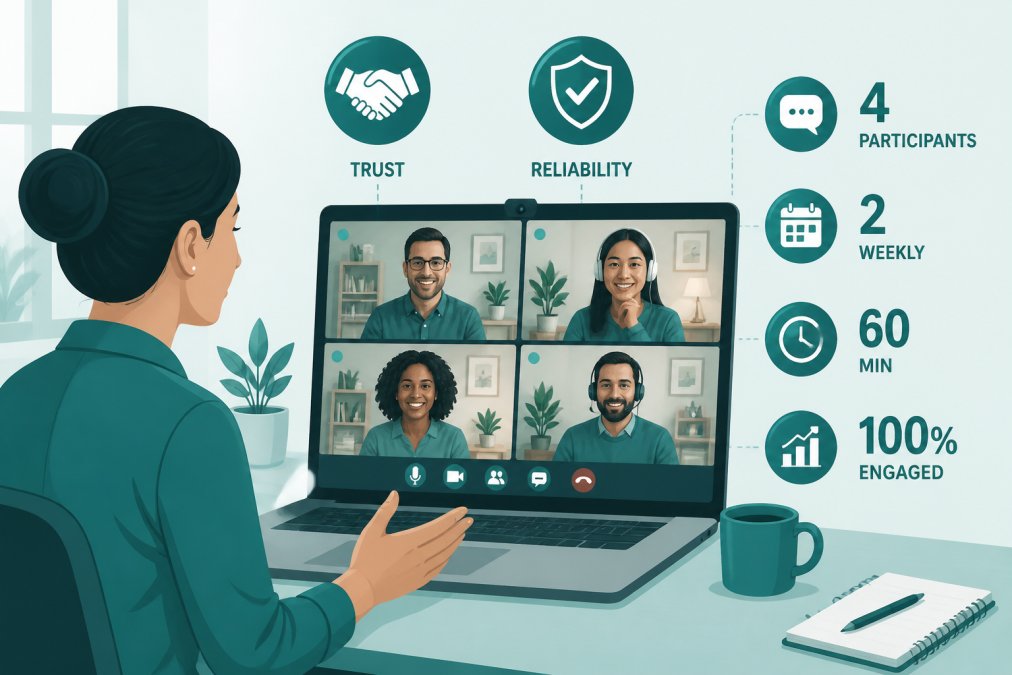
The third practice is acknowledging the reality of working from home. Your team members manage household interruptions, timezone differences, and blurred boundaries between work and home. Acknowledging this builds goodwill and makes expectations more realistic.
Finally, follow through on commitments. If you say you’ll get back to someone by Friday, do it. Remote work strips away informal relationship-building. The trust that replaces it is built entirely through consistent action.
Step 1: Establish Clear Expectations and Goals
Ambiguity is toxic in remote teams. Without daily visual feedback, unclear expectations lead to misalignment and frustration.
Define what success looks like for each role specifically. What are the three to five outcomes this person is responsible for delivering? What does done look like? Document these expectations in a shared document, not email. Review it together in your first one-on-one and revisit quarterly.
Set goals using output-based metrics, not activity-based ones. Don’t measure whether someone is online during certain hours. Measure what they deliver: projects completed, revenue generated, support tickets resolved. Output-based management is fairer and more motivating.
Be explicit about communication expectations. How quickly should people respond in different channels? When should someone escalate rather than handle it alone? Clarify how decisions get made. Who has authority to decide what? Remote teams need clearer decision-making frameworks than co-located ones.
Step 2: Master Asynchronous Communication and Check-In Cadence
The biggest mistake managers make when moving to remote work is trying to replicate synchronous communication patterns. They schedule back-to-back video calls and create a culture where being "always on" is the norm. This burns people out.
Instead, optimize for asynchronous communication. Write clear messages that don’t require immediate response, document decisions so people can catch up when they log on, and record video updates instead of requiring live attendance.
Asynchronous communication works best when you write with context. Don’t send "Can you review this?" Send "I need your feedback on this proposal by Thursday because we’re presenting to the client Friday afternoon. The key questions are: Does the timeline make sense? Are there any technical concerns?"
Respect time zones. If your team spans multiple zones, don’t schedule important meetings at times that require someone to join at 6 AM or 9 PM. Rotate meeting times or use asynchronous updates instead.

Establish a clear check-in cadence. Weekly one-on-ones are non-negotiable for remote teams. Focus on three things: progress toward goals, obstacles or challenges, and how the person is doing overall. Ask directly: "How are you doing? Is there anything I should know about?"
Use one-on-ones for real conversations, not just status updates. Request status in writing beforehand so you can use the call for actual dialogue.
Step 3: Measure Productivity by Output, Not Hours
The shift from measuring hours to measuring output is the most important change a manager can make when adapting their management style for remote employees. It replaces surveillance with trust.
Many managers equate visibility with productivity. If they can’t see someone working, they worry the person isn’t actually working. This assumption is usually wrong. Remote employees with clear goals and autonomy often deliver more in fewer hours than office-bound counterparts.
Define what productivity means for each role. For a software engineer, it might be code shipped and bugs fixed. For a customer success manager, it might be customer retention rate. For a content creator, it might be pieces published and engagement metrics. Focus on what gets delivered, not how many hours someone is at their desk.
Take The Official DiSC® Assessment Online Now! →
Give people autonomy over how they achieve those metrics. Some work best early in the morning; others are night owls. Remote work allows for this flexibility.
Track progress toward goals regularly, not just at review time. Monthly check-ins on key metrics keep everyone aligned and catch problems early.
Output-based management doesn’t mean hands-off management. You still provide feedback, remove obstacles, and develop your people. You’re just measuring results rather than activity.
Tools for Managing Remote Employees Effectively
The right tools reduce friction and create shared context for distributed teams. However, tools are only effective if used intentionally.
Project management software prevents chaos by making tasks, deadlines, and dependencies visible to everyone. Communication platforms matter less than consistency, pick one and commit to it. Document management systems are essential for remote teams. Decisions, processes, and institutional knowledge need to live somewhere searchable and accessible.
Video conferencing tools should be used for conversations that genuinely benefit from face-to-face interaction: one-on-ones, team bonding, complex problem-solving. Many meetings work better as written updates or recorded video messages.
Beyond software platforms, understanding how your team members prefer to communicate and work is equally important. DiSC Catalyst for Teams helps remote teams understand how different personality styles communicate and prefer to work. Understanding these differences helps managers adapt their communication approach and reduces friction across distributed teams.
Tool overload is a real problem. Before adopting a new tool, ask whether it solves a real problem or just creates another notification stream.
Remote Team Communication Templates and Frameworks
Templates reduce the cognitive load of writing clear messages and create consistency across your team.
One-on-One Agenda Template:
- What’s going well this week?
- What’s blocking progress or causing stress?
- What do you need from me?
- How are you doing outside of work?
Weekly Team Update Template:
- What we accomplished this week
- What we’re working on next week
- Blockers or risks we need to address
- Wins to celebrate
Decision Documentation Template:
- What decision was made?
- Why did we make this choice?
- What alternatives did we consider?
- When will we revisit this decision?
Feedback Framework:
- Specific observation (what you saw or heard)
- Impact (how it affected the outcome or others)
- What you’d like to see differently
- Support you can offer
Common Mistakes to Avoid When Adapting Your Management Style
The first mistake is over-communicating about process while under-communicating about purpose. Remote teams need clarity about why the work matters, not excessive meetings and status updates.
The second mistake is treating remote work as temporary. If remote work is here to stay, commit to doing it well rather than as a placeholder.
The third mistake is assuming synchronous communication is always better. Asynchronous communication often works better because it gives people time to think and doesn’t fragment their day.
The fourth mistake is micromanaging through surveillance. Time-tracking software and constant status updates damage trust. Trust-based management is more effective.
The fifth mistake is ignoring the psychological and social needs of remote teams. Remote work can be isolating. Investing in team bonding and checking in on how people are doing matters more in remote settings.
Adapting your management style for remote employees comes down to this: be clear about expectations, trust people to deliver, and build relationship intentionally. The specific tools and processes matter far less than the underlying principles.
Managing remote employees successfully requires letting go of the assumption that visibility equals productivity and building a leadership approach centered on trust, clarity, and intentional connection. Start with establishing clear expectations and goals, then move into building the communication cadence and feedback loops that keep remote teams aligned and engaged.
Your Life’s Path’s DiSC Catalyst for Teams helps managers understand their own behavioral style and how it shows up in remote settings, as well as how to adapt their approach for team members with different styles. When managers understand what drives their own communication preferences and recognize these differences in their teams, they can adjust their management approach accordingly. This behavioral insight, combined with the practical frameworks covered here, gives you the foundation to build a remote team culture where people do their best work.
Frequently Asked Questions
How often should you check in with remote employees?
Check-in frequency depends on your team's needs and role. Most effective managers conduct weekly one-on-ones lasting 30-45 minutes, with daily asynchronous updates through written communication. New remote hires benefit from more frequent touchpoints, consider bi-weekly check-ins for the first 90 days. The key is consistency and predictability. Set a regular schedule your team can count on, and adjust based on individual employee autonomy levels and project complexity. Use these sessions to discuss progress, obstacles, and development goals rather than micromanaging daily tasks.
What management style works best for remote workers?
Remote employees thrive under outcome-based management focused on results rather than activity. This style emphasizes trust, clear expectations, and measurable deliverables. Effective remote managers balance autonomy with accountability, they set explicit goals, provide the tools and support needed, then step back to let employees own their work. Regular feedback loops, transparent communication, and flexibility around work hours and location are essential. Understanding your team's individual behavioral drivers through assessments like DiSC profiles helps you tailor your approach to each person's communication preferences and work style.
How do you build trust with a remote team?
Trust in remote settings requires transparency, reliability, and psychological safety. Be consistent with communication, follow through on commitments, and admit mistakes openly. Create space for informal interaction beyond task-focused meetings, virtual team building and casual video check-ins help humanize remote relationships. Demonstrate trust by giving employees autonomy over how and when they work, as long as deliverables are met. Provide regular, specific feedback and recognize contributions publicly. Avoid micromanagement tools that monitor activity; instead, focus on output-based accountability. One-on-ones should include personal check-ins about well-being, not just work progress.
What are the biggest challenges when managing remote employees?
Common remote management challenges include time zone coordination, reduced visibility into employee well-being, communication gaps leading to misalignment, and difficulty building team cohesion. Managers often struggle with the shift from activity-based to output-based assessment, creating tension between autonomy and accountability. Onboarding and mentoring new remote hires is harder without in-person interaction. Conflict resolution becomes more complex without face-to-face dialogue, and managers may inadvertently create psychological safety issues by over-relying on asynchronous communication. Addressing these challenges requires intentional frameworks, the right collaboration tools, and a willingness to adapt your leadership approach to distributed team dynamics.
This article was written using GrandRanker