
Table of Contents
- Why Difficult Participants Matter: The Real Cost of Poor Workshop Dynamics
- Identify the Type of Difficult Participant You’re Facing
- Set Ground Rules and Expectations Before Conflict Starts
- Scripts for Managing Disruptive Workshop Participants in Real Time
- How to Handle a Dominator in a Meeting: Specific Tactics
- Facilitation Techniques for Difficult Groups: Build Psychological Safety
- When to Remove a Participant and How to Do It Professionally
- Post-Workshop Conflict Resolution and Follow-Up
Last Updated: August 27, 2026
Why Difficult Participants Matter: The Real Cost of Poor Workshop Dynamics
Managing difficult participants in workshops ranks as the top challenge for professional facilitators, affecting up to 80% of group sessions according to TrainingPros survey of professional facilitators. When a single person dominates conversation, checks out mentally, or becomes confrontational, the entire group’s learning suffers. Engagement drops, psychological safety erodes, and workshop outcomes slip away.
Most facilitators miss the real issue: difficult participants aren’t inherently the problem. Workshops lack the structure, clarity, and emotional intelligence to prevent challenging dynamics from taking root. According to SessionLab’s State of Facilitation 2026, 71.8% of facilitators report participant satisfaction as a top indicator of success, yet only 33.1% have an agreement with clients on what success actually looks like. That gap is where difficult situations flourish.
With the right facilitation techniques and a clear playbook for handling difficult participants, you can transform even the most challenging room into one where people feel heard, respected, and motivated to contribute.
Identify the Type of Difficult Participant You’re Facing
Not all difficult participants are difficult in the same way. Before you can manage someone effectively, understand what’s driving their behavior. Around 90% of human communication is non-verbal, according to UX Collective research on workshop dynamics, which means body language, tone, and energy signal what’s happening beneath the surface.
The Dominator
The dominator speaks frequently, interrupts others, and steers conversations toward their own interests. They consume airtime and discourage quieter participants from speaking. The dominator isn’t always hostile; they might genuinely believe they’re helping move the discussion forward. But the effect is the same: others disengage, and the group loses valuable perspectives. Once you establish firm, consistent boundaries with respect and clarity, most dominators adjust quickly.
The Disengaged or Silent Participant
This person attends but doesn’t contribute. They may be scrolling their phone, staring at their laptop, or checking out mentally. Their silence might stem from anxiety, lack of psychological safety, or not seeing relevance to their role. Silent participants are often the easiest to re-engage because they’re not actively resisting. A simple, direct invitation to contribute, combined with reassurance that their input is valued, often brings them back into the conversation.
The Aggressive Challenger
This person questions the facilitator’s credibility, challenges the workshop’s purpose, or becomes confrontational when disagreeing. Their aggression can stem from genuine skepticism or feeling forced to attend. Handled well, challengers can become your most engaged participants because they care enough to push back. They need acknowledgment, respect for their perspective, and evidence that their concerns are being heard.
Set Ground Rules and Expectations Before Conflict Starts
The best way to handle difficult participants is to prevent difficult situations from arising in the first place. Setting the stage well by building motivation and constructive communication from the workshop’s beginning makes all the difference.

Ground rules work because they’re democratically established, not imposed from above. Instead of announcing rules, invite the group to co-create them. Ask: “What do we need from each other to make this time valuable?” You’ll typically hear responses like “respect everyone’s perspective,” “stay present,” “one person speaks at a time,” and “what’s said here stays here.” When participants generate the rules themselves, they own them and enforce them on each other.
Write the rules on a visible surface and reference them throughout the workshop. Clarity on success also matters enormously. Spend the first 10 minutes explaining the workshop’s purpose, how it connects to their work, and what success looks like. Be specific: “By the end of today, you’ll have a shared understanding of how your team’s communication patterns affect project outcomes, and you’ll have identified three concrete changes to implement next week.”
Scripts for Managing Disruptive Workshop Participants in Real Time
Scripts aren’t meant to sound robotic. They’re frameworks you adapt to your voice and the situation. The goal is to give you language that de-escalates, validates, and redirects without shutting anyone down.
Script for Redirecting a Dominator
Situation: Someone has spoken for the last three comments, and others are visibly disengaging.
What to say: “I appreciate your insights, you clearly care about getting this right. I want to make sure we hear from everyone in the room because each perspective adds something valuable. Let’s pause here and hear from someone who hasn’t had a chance to speak yet. [Pause, make eye contact with a quiet participant.] What’s your take on this?”
Why it works: You validate the dominator’s contribution first, so they don’t feel attacked. You then redirect with a clear reason and immediately move the conversation elsewhere.
Script for Engaging a Silent Participant
Situation: Someone has been quiet the entire workshop, and you want to hear from them.
What to say: “[Name], I’m curious about your perspective on this. You work with this challenge every day, what’s your experience been?”
Why it works: You name them specifically, which signals safety. You reference their expertise or role, which shows you see them as a valuable contributor.
If they hesitate: “That’s fair. But I’d genuinely like to hear your take, even if it’s just a quick reaction. No pressure, but your input matters.”
Script for De-Escalating an Aggressive Challenge
Situation: Someone says something confrontational like “This workshop isn’t addressing our real problems.”
What to say: “I hear you, and I think that’s actually an important point. Help me understand what the real problems are from your perspective. What would need to happen in this workshop for it to feel relevant to you?”
Why it works: You validate their concern first, which de-escalates immediately. Then you turn it into a collaborative problem-solving conversation instead of a debate.
Take The Official DiSC® Assessment Online Now! →
How to Handle a Dominator in a Meeting: Specific Tactics
Dominators are often high-confidence, high-energy people who genuinely believe they’re contributing value. Here are three specific tactics that work.
Establish speaking time limits early. Before the workshop starts, announce: “We have a lot of ground to cover, so I’m going to gently manage speaking time. Each person gets about two minutes per round to ensure we hear from everyone.”
Use the “parking lot” technique. When a dominator goes off on a tangent, acknowledge it and redirect: “That’s a great point, it’s a bit outside our scope for today, but let’s write it in the parking lot so we don’t lose it.”
Assign them a role. Channel their energy by making them a facilitator of a breakout group or asking them to synthesize the group’s key points. When they feel heard and given responsibility, they often shift from dominating to contributing.
Facilitation Techniques for Difficult Groups: Build Psychological Safety
Psychological safety is the foundation of effective facilitation. When participants feel safe to speak, ask questions, disagree respectfully, and admit uncertainty, engagement skyrockets. Without it, people stay silent, disengage, or become defensive.
Active Listening and Validation
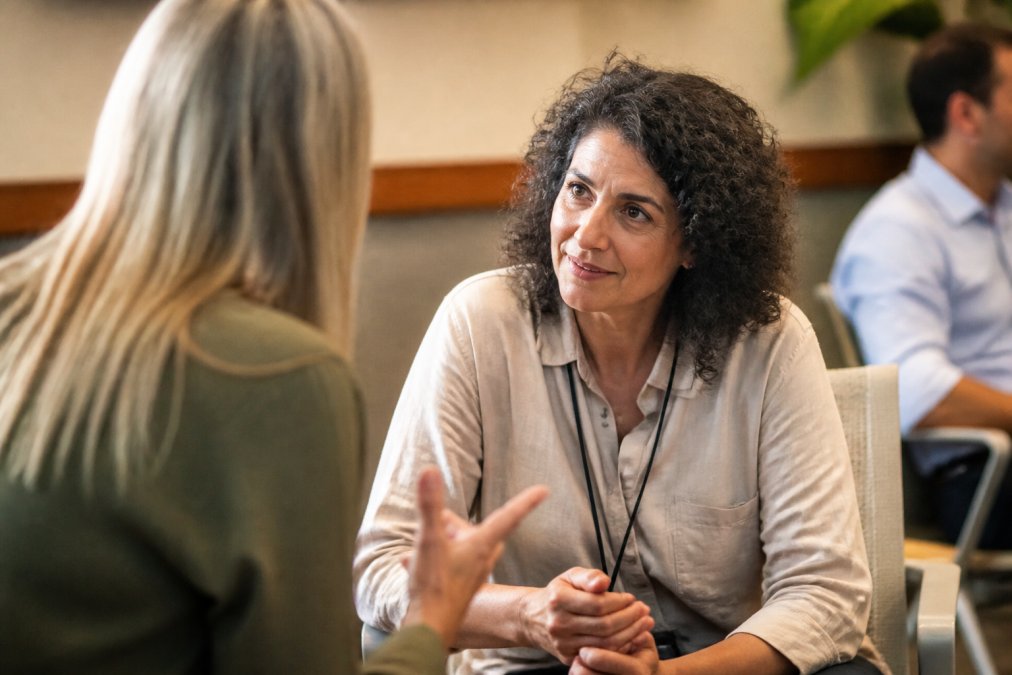
Active listening means you’re fully present with the speaker, not planning your next comment. It means pausing before responding, asking clarifying questions, and reflecting back what you heard. When someone feels genuinely heard, their defensiveness drops. Validation doesn’t mean you agree with everything said. It means acknowledging the person’s perspective as legitimate. Say things like “I see why that would be frustrating” or “That’s a valid concern.”
Non-Verbal Communication and Facilitator Presence
Your body language, facial expressions, and energy set the tone for the entire room. If you’re anxious or defensive, participants mirror that energy back. If you’re calm, confident, and open, people relax. Make eye contact with participants, especially quieter ones. Use open body language, uncrossed arms, facing the group, moving purposefully around the room. Notice who’s checked out and respond to what you observe, not just to what’s on your agenda.
Virtual vs. In-Person Approaches
Virtual workshops require different facilitation techniques because you lose non-verbal cues. Use more explicit check-ins: “I’m noticing some people haven’t spoken yet, would you like to share your thoughts?” Use breakout rooms frequently to create smaller, safer spaces. In-person workshops allow for more spontaneous interaction and physical movement, which naturally increases engagement. Use proximity strategically: move closer to someone who’s disengaged, stand near the dominator to subtly signal they should wrap up.
When to Remove a Participant and How to Do It Professionally
Sometimes, despite your best efforts, a participant’s behavior becomes so disruptive that it damages the group’s ability to learn. Removing someone is a last resort, but it’s sometimes necessary.
Before removing someone, try private conversation first. During a break, pull them aside and say: “I’ve noticed some tension in the room, and I want to check in with you. Is everything okay? Is there something about the workshop that isn’t working for you?” Often, this conversation alone shifts the dynamic.
If the behavior continues, be direct: “I appreciate you being here, but I’m noticing that [specific behavior] is making it hard for the group to focus. I need to ask you to either [specific change] or step out for this session.” If they refuse to adjust or become more aggressive, stay calm, professional, and brief: “I understand this is frustrating, but I can’t have this behavior continue. I’m going to ask you to step out now. Let’s reconnect after the session to talk through what happened.”
Post-Workshop Conflict Resolution and Follow-Up
The workshop doesn’t end when people leave the room. Follow-up is critical for ensuring that difficult participants feel heard and that unresolved tension doesn’t fester.
Send a brief thank-you message to the group within 24 hours, highlighting key takeaways and next steps. If there was conflict, address it directly but diplomatically: “We had some strong discussion about [topic], which is healthy. I appreciate everyone’s willingness to engage with different perspectives.”
Reach out individually to anyone who seemed disengaged or conflicted. A simple message, “I noticed you seemed frustrated during the workshop. I’d like to understand what wasn’t working for you so I can improve”, often opens a conversation that transforms their experience. For participants who were particularly challenging, ask: “How did the workshop land for you? What would have made it more valuable?” Listen without defending.
Difficult participants in workshops aren’t a sign of failure, they’re a sign that you’re tackling important work with real people who care about the outcome. The difference between workshops that flounder and those that thrive comes down to preparation, clarity, and genuine skill in reading the room and responding with empathy and boundaries.
Your Life’s Path helps organizations build these facilitation skills through our official DiSC® assessments and workshops, which provide behavioral insights that transform how teams communicate and collaborate. Whether you’re managing a dominator, re-engaging a silent participant, or building psychological safety in a group, understanding behavioral styles through tools like the DiSC Workplace Profile or our Catalyst platform for flexible facilitation gives you the language and framework to navigate difficult dynamics with confidence. Take The Official DiSC® Assessment Online Now to start building the self-awareness and team insights that make facilitation easier and more effective.
|
Participant Type |
Primary Challenge |
Key Intervention |
Expected Outcome |
|---|---|---|---|
|
Dominator |
Consumes airtime, discourages others |
Set speaking limits, redirect to quieter voices, assign facilitator role |
Balanced participation, energy channeled productively |
|
Silent/Disengaged |
Withdraws, doesn’t contribute perspective |
Direct invitation, validate their expertise, create safety |
Re-engagement, valuable input added |
|
Aggressive Challenger |
Confrontational, undermines workshop credibility |
Validate concern, collaborate on solutions, acknowledge legitimacy |
Shifted from resistance to engagement |
Frequently Asked Questions
What are the most common types of difficult participants in workshops?
Research shows managing difficult participants ranks as the top challenge for professional facilitators, affecting up to 80% of group sessions. The most common types include dominators who monopolize speaking time, disengaged participants who resist participation, and aggressive challengers who question authority or become confrontational. Each type requires different intervention strategies. Understanding which type you're facing helps you choose the right de-escalation approach and maintain workshop dynamics that support learning and engagement.
How can scripts for managing disruptive workshop participants help me stay calm under pressure?
Pre-prepared scripts remove the burden of improvising responses in real-time, which reduces your cognitive load and helps you stay composed. When you have language ready for common situations—redirecting dominators, inviting silent participants, or de-escalating aggression—you can focus on reading the room and adjusting your facilitation techniques for difficult groups rather than scrambling for words. Scripts also ensure consistency and professionalism, helping you maintain authority while staying empathetic and solution-focused.
Is it better to address disruptive behavior publicly or privately?
The answer depends on the situation and severity. Minor disruptions (like someone speaking out of turn) can often be addressed immediately and gently in the moment using scripts that redirect without embarrassment. Serious behavioral issues—aggression, repeated rule-breaking, or behavior that harms psychological safety—should be addressed privately after the workshop to avoid triggering defensiveness or damaging group cohesion. Private conversations allow you to understand the participant's perspective, clarify expectations, and decide whether they should continue attending future sessions.
How does understanding behavioral styles help with managing difficult participants?
Understanding behavioral drivers through assessments like DiSC profiles reveals why participants behave the way they do. A dominator may be high-D (direct, results-focused) and unaware they're crowding out others. A silent participant might be high-C (careful, detail-focused) and need processing time before speaking. When facilitators and participants understand these styles, they develop empathy and adjust their communication. This transforms 'difficult' behavior into predictable patterns that can be managed through facilitation techniques tailored to each person's natural style, improving workshop dynamics and outcomes.
This article was written using GrandRanker