
Quick Summary
Continuous feedback is the regular, two-way exchange of information about work performance, held throughout the year instead of once in an annual review. To build a continuous feedback culture, start by establishing trust and psychological safety, then train managers, set a regular rhythm, make recognition routine, and create channels for upward feedback.
- Build psychological safety before asking employees for feedback, since people will not speak up otherwise.
- Train managers to describe specific observations, explain their impact, and agree on one concrete next step.
- Start with a weekly check-in, a monthly one-on-one, and a quarterly review of goals and skills.
- Make positive recognition routine by naming specific behaviors and their results.
- Pilot the approach with one team for 60 to 90 days before expanding company-wide.
Table of Contents
- Step 1: Build Trust and Psychological Safety Before You Ask for Feedback
- What Continuous Feedback Is and Why It Differs from Annual Reviews
- Step 1: Build Trust and Psychological Safety Before You Ask for Feedback
- Step 2: Train Managers to Give Constructive Feedback
- Step 3: Set a Rhythm, Including How Often to Give Employee Feedback
- Step 4: Make Positive Recognition a Routine Habit
- Step 5: Create Channels for Employees to Give Feedback Upward
- Step 6: Handle Negative Reactions, Conflict, and Sensitive Conversations
- Employee Feedback Best Practices to Keep the Culture Working
- Make Feedback Specific, Timely, and Behavior-Based
- Balance Corrections with Recognition
- Ask for Feedback on Your Own Management
- Reduce Bias and Inconsistent Standards
- Protect Privacy and Use Feedback Tools Responsibly
- Accommodate Different Communication Styles and Accessibility Needs
- Follow Up on Every Concern
- Watch for These Common Failure Modes
- Measuring Whether Your Feedback Culture Is Working
- Start Your Feedback Culture with a Pilot Team and Get Support from Your Life’s Path
- Frequently Asked Questions
Step 1: Build Trust and Psychological Safety Before You Ask for Feedback
Last Updated: October 30, 2026

Continuous feedback sounds simple. Share what’s working, flag what isn’t, and do it often. In practice, most teams struggle because people don’t feel safe enough to speak up. This guide from Your Life’s Path walks you through building a continuous feedback culture, one step at a time.
Continuous feedback is the regular, two-way exchange of information about work performance, held throughout the year instead of once in an annual review.
Annual reviews have a timing problem. By the time an employee hears about a missed deadline in December, the project is long over. Continuous feedback closes that gap by making feedback a normal part of the week.
What Continuous Feedback Is and Why It Differs from Annual Reviews
Annual reviews are a summary. Continuous feedback is a habit. The difference shows up in three places:
- Timing: Feedback arrives while the work is still fresh.
- Direction: Feedback moves both ways, from manager to employee and back.
- Scale: Small, frequent notes replace one large, stressful conversation.
Most teams that try this make the same early mistake. They add more meetings and call it a feedback culture. Meetings alone don’t build the habit. The habit comes from people trusting that a feedback conversation will be useful, not punishing.
Step 1: Build Trust and Psychological Safety Before You Ask for Feedback
Psychological safety means people believe they can speak up, admit mistakes, and ask questions without being punished or embarrassed. Without it, employees will nod in meetings and say nothing useful.
Start here before you ask for a single comment:
- Ask questions and listen to the answers without interrupting.
- Thank people when they raise a problem, even an uncomfortable one.
- Admit your own mistakes in front of the team.
- Keep private feedback private, and never use it as a public example. For guidance on building that foundation for remote teams, read how to foster psychological safety in remote teams.
Remote teams need extra effort. Without hallway chats, trust builds slower. Hold regular one-on-ones with video on, and open them with a simple check-in, not a task list.
Watch out: If a manager reacts badly to the first honest comment, the team will stop offering them. Fix that reaction before you launch anything.
Step 2: Train Managers to Give Constructive Feedback
Managers set the tone. If they haven’t practiced giving feedback, the whole program stalls.
Good training covers three skills:
- Specific observation: Describe what happened, not what the person is like.
- Impact: Explain the effect on the work, the team, or the customer.
- Next step: Agree on one concrete action.
Constructive Feedback Scripts for Managers
Scripts help managers start hard conversations without freezing. Adapt these to your own words:
“In Tuesday’s client call, you interrupted the customer twice. The client seemed to pull back after that. What do you think happened, and what could we try next time?”
“The report was accurate, but the summary took too long to reach the point. Can we tighten the first paragraph by Friday?”
“I want to flag something I noticed in the handoff. Can we talk through what got missed?”
Each script names a behavior, describes the result, and asks for the employee’s view. That last part matters. Two-way talk is what separates feedback from criticism.
Step 3: Set a Rhythm, Including How Often to Give Employee Feedback
Pick a rhythm and keep it. Teams that give feedback once a quarter and then go quiet end up back at annual reviews in practice.
A workable starting point:
- Weekly: Short check-ins on current priorities. Ten to fifteen minutes is enough.
- Monthly: A deeper one-on-one on growth, blockers, and feedback in both directions.
- Quarterly: A review of goals, skills, and what has changed.
Feedback that is given right after a specific event is usually more useful than feedback saved for a scheduled meeting. The right answer to how often to give employee feedback depends on role and workload, but “more often than your current schedule” is a good default for most teams.
Consider running these one-on-ones remotely with a shared agenda that both people can edit. It keeps the rhythm going even when schedules shift.
Step 4: Make Positive Recognition a Routine Habit
Recognition gets skipped more than criticism. That’s a mistake. Teams only hear about problems when feedback is mostly negative, and people stop listening.
Make recognition specific and quick:
- Name the behavior: “Your edits cut the review time in half.”
- Say why it mattered: “The client signed two days early.”
- Share it where others can see, when the person is comfortable with that.
Some teams set a standing item in weekly meetings where anyone can name one win. It takes two minutes and builds the habit of noticing good work.
Step 5: Create Channels for Employees to Give Feedback Upward
Feedback shouldn’t only flow down. Employees see things managers miss: broken processes, unclear priorities, and bad tools.
Give them several simple ways to speak up:
- A short anonymous form, reviewed by someone outside the direct team
- A standing agenda slot in team meetings
- A direct question in one-on-ones: “What should I stop doing?”
Then close the loop. When someone raises an idea, tell them what happened to it, even if the answer is no. Silence teaches people that speaking up is pointless.
Step 6: Handle Negative Reactions, Conflict, and Sensitive Conversations
Feedback will sometimes trigger defensiveness, tears, or anger. That’s normal. How you respond decides whether the next conversation happens.
When someone reacts strongly:
- Pause and lower your voice.
- Acknowledge the feeling: “This is hard to hear, and I understand why.”
- Separate the person from the problem.
- Schedule a follow-up if the emotion is too high to continue.
Watch out: Never give feedback in public about a sensitive topic such as performance improvement, personal issues, or pay. Move it to a private setting first.
For a deeper look at managing heated moments, the same principles apply to team disagreements that start with feedback.
Take The Official DiSC® Assessment Online Now! →
Employee Feedback Best Practices to Keep the Culture Working
A feedback culture survives on repeatable habits, not good intentions. Use this checklist as an operating standard, and revisit it quarterly to catch drift.
Make Feedback Specific, Timely, and Behavior-Based
Vague praise (“great job”) and vague criticism (“needs to be more proactive”) both fail because neither tells the person what to repeat or change. The fix is a simple three-part structure:
- Observation: What you saw or heard, tied to a specific moment.
- Impact: The effect on the work, the team, or the customer.
- Request or next step: One concrete action, agreed together.
Example: “In yesterday’s handoff, the client’s question about pricing went unanswered for two days. That delayed their sign-off. Can we agree on a same-day response rule for client questions?”
Timeliness matters as much as specificity. Feedback given soon after the event is easier to act on than feedback saved for a monthly meeting. If a conversation would take more than ten minutes, schedule it rather than forcing it into a check-in.
Balance Corrections with Recognition
Teams that hear only about problems stop listening. A common pattern is to aim for a rough balance: for every corrective conversation, look for at least one specific recognition moment. Recognition should name the behavior and the result, not just the effort.
- Weak: “Thanks for all your hard work.”
- Strong: “Your rewrite of the onboarding email cut support tickets by a third last month. That freed the team to focus on the launch.”
Share recognition where others can see it when the person is comfortable with that. Some teams set a standing two-minute “wins” item in weekly meetings; others use a shared channel. The mechanism matters less than the consistency. Publicly celebrating these small victories reinforces a shared language of appreciation that helps improve team communication across every project phase.
Ask for Feedback on Your Own Management
Feedback that only flows down is a review, not a culture. Managers should routinely ask direct questions such as:
- “What should I stop doing that gets in your way?”
- “What is one thing I could do differently to make your work easier?”
- “When was the last time you disagreed with a decision I made? What happened?”
Then close the loop. Tell the person what you heard and what you will change, even if the answer is “I’m not going to change this, and here’s why.” Silence teaches people that speaking up is pointless.
Reduce Bias and Inconsistent Standards
Feedback is vulnerable to bias when it is vague, infrequent, or based on personality rather than behavior. Three safeguards help:
- Use behavior-based language. Describe what happened, not who the person is. “You missed the deadline” is observable; “you’re unreliable” is a label.
- Check for patterns. Review feedback across a team to see whether the same behaviors get different reactions from different people.
- Separate feedback from evaluation. Feedback conversations should focus on development; formal ratings and pay decisions belong in a separate process with their own documentation.
Protect Privacy and Use Feedback Tools Responsibly
Feedback tools can easily become surveillance if they are not governed. Before adopting any tool, confirm:
- Who can see submitted feedback, and whether anonymity is real or only nominal.
- How long feedback is retained and whether it can be exported or deleted.
- Whether the tool is used for development only or also for performance ratings.
- What safeguards prevent feedback from becoming a substitute for direct conversation.
A short written policy, one page is enough, should state these rules and be shared with everyone who uses the tool.
Accommodate Different Communication Styles and Accessibility Needs
Not everyone is comfortable speaking up in a meeting. Offer multiple channels: written forms, one-on-one conversations, and anonymous options. For employees with disabilities or those working remotely, confirm that feedback channels are accessible, captioned video calls, screen-reader-compatible forms, and flexible timing for check-ins. The goal is equal access to the feedback loop, not identical participation.
Follow Up on Every Concern
A concern raised in February should have a visible answer by March. Track open items in a shared log, assign an owner, and report back on what changed. Follow-through is the single strongest signal that feedback is worth giving.
Watch for These Common Failure Modes
- Feedback as a substitute for conversation. Written comments without dialogue feel like criticism.
- Feedback only during reviews. If feedback appears only at formal checkpoints, the culture has not changed.
- Manager-only feedback. Peer and upward feedback are what make the culture two-way.
- No follow-through. Unanswered concerns teach people to stop raising them.
Keep this checklist visible and review it with managers each quarter. The habits that keep a feedback culture working are simple, but they are not automatic.
Measuring Whether Your Feedback Culture Is Working
Most teams that launch a feedback initiative never define what success looks like, so they cannot tell whether it is working. Measurement does not need to be complicated, but it does need to be specific, baseline-driven, and reviewed on a schedule.
Start with a Baseline
Before you change anything, capture a snapshot of where you are. A short anonymous survey (eight to ten questions) is enough. Ask employees to rate, on a five-point scale:
- I receive feedback often enough to improve my work.
- The feedback I receive is specific and actionable.
- I feel safe disagreeing with my manager.
- I know how to raise a concern, and I have seen concerns get a response.
- Feedback is given fairly across the team.
Record the results and the date. Without a baseline, you cannot tell whether the culture is improving or just feels different.
Track a Small Set of Useful Measures
Pick four to six measures and review them quarterly. More than that becomes noise.
- Check-in participation: The percentage of scheduled one-on-ones that actually happen. Participation often drops when managers are busy, which is exactly when feedback matters most.
- Feedback usefulness: The share of survey respondents who rate feedback as specific and actionable. This is the closest proxy for quality.
- Upward feedback volume: How many concerns or ideas employees raise through any channel. A rising number is usually a good sign; a falling number after an initial spike often means follow-through has slipped.
- Response time: The median number of days between a concern being raised and a visible response. Aim for days, not months.
- Follow-through rate: The percentage of raised concerns that have a documented outcome, even if the outcome is “no change.”
- Retention of high performers: Whether turnover among top-rated employees changes over several quarters. Treat this as a lagging indicator, not a quick win.
Pair Numbers with Direct Questions
Quantitative measures tell you what is happening; direct questions tell you why. Add two or three open-ended prompts to your survey each quarter:
- “Describe a recent piece of feedback that helped you.”
- “What makes it hard to speak up on this team?”
- “What happened the last time you raised a concern?”
Read the responses for themes, not individual complaints. A recurring theme about one manager is a coaching issue; a recurring theme across teams is a system issue.
Review on a Schedule and Act on What You Find
Set a quarterly review with a named owner, typically an HR or people-operations lead, and a simple agenda:
- Compare current measures to the baseline.
- Identify the one measure that moved least or worsened.
- Agree on one change to test in the next quarter.
- Report the results back to employees.
Reporting back matters. Teams that never hear the results of a survey stop filling it out. A short summary of what changed and what did not is enough.
Avoid These Measurement Traps
- Measuring activity instead of quality. Counting meetings held says nothing about whether feedback was useful.
- Chasing a single number. One metric in isolation can be gamed or misread; look at trends across several measures.
- Ignoring non-respondents. The people who do not answer the survey are often the ones with the most to say. Follow up in one-on-ones.
- Declaring victory too early. Culture change shows up over quarters, not weeks. Give the measures at least two full review cycles before drawing conclusions.
Measurement is what turns a feedback initiative from a slogan into a managed practice. Start with a baseline, track a handful of measures, ask direct questions, and report back. That cycle is the difference between hoping the culture is working and knowing it.
Start Your Feedback Culture with a Pilot Team and Get Support from Your Life’s Path
Don’t roll this out company-wide on day one. Pick one team, run the steps for 60 to 90 days, and collect honest input. Adjust the rhythm, scripts, and channels based on what you learn, then expand.
Your Life’s Path offers DiSC® assessments and team workshops that help managers understand how different people prefer to receive feedback, which makes conversations easier. Our DiSC Management Profile and DiSC Workplace Profile are useful starting points for pilot teams, and DiSC Catalyst for Teams supports facilitated learning sessions. Pricing depends on quantity, dates, and delivery format, so contact Your Life’s Path directly for a current quote.
Building a continuous feedback culture takes patience. Start small, stay consistent, and let the results guide the next step. Your Life’s Path can help you make that first step a practical one.
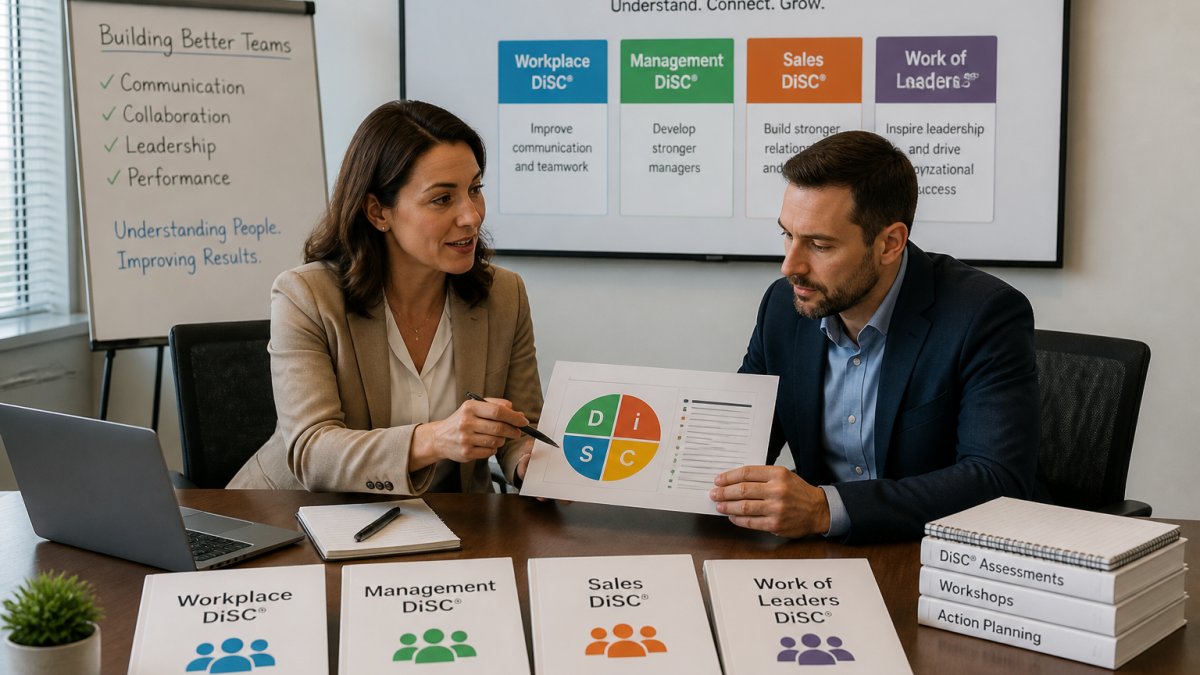
The article’s pilot-team advice can be scanned at a glance in this summary of the Your Life’s Path tools it names.
|
Tool |
Best for |
Key difference |
|---|---|---|
|
DiSC Management Profile |
Managers starting a pilot team |
Shows how managers prefer to give and receive feedback |
|
DiSC Workplace Profile |
Pilot team members |
A starting point for understanding individual feedback preferences |
|
DiSC Catalyst for Teams |
Facilitated team learning sessions |
Supports group learning sessions |
Frequently Asked Questions
What is a culture of continuous feedback?
A culture of continuous feedback is a workplace where feedback flows regularly, in both directions, as part of everyday work rather than only during an annual review. Managers give timely, specific comments on work as it happens, employees share concerns and suggestions with their leaders, and recognition is given when accomplishments occur. The goal is to shorten the gap between an action and the response to it, so people can adjust quickly. Teams in this kind of culture treat feedback as routine, supported by trust and clear expectations, rather than as a stressful event.
How often should managers give employees feedback?
Most teams benefit from a regular one-to-one check-in at least every week or every other week, with feedback given on specific work as soon as practical after it happens. Formal reviews can stay on a set schedule, but they should not be the only time employees hear how they are doing. The right rhythm depends on role complexity and how new the employee is, so newer staff often need more frequent input. Pick a cadence, keep it consistent, and adjust it based on what employees report about whether the input is useful.
What are examples of continuous feedback at work?
Continuous feedback examples include a manager commenting on a presentation the same afternoon it was delivered, a short note of thanks after a client project closes, and a brief coaching conversation after a meeting that did not go as planned. Peers can also give feedback in a team channel or during a project retrospective. Keep each example specific: name the behavior, state its effect, and suggest one next step. Small, frequent comments like these do more to build a feedback habit than rare, lengthy critiques.
How do you measure whether a feedback culture is working?
Measure both activity and outcomes. Activity measures include how many check-ins happen as scheduled, how often employees report receiving useful feedback, and whether managers complete feedback training. Outcome measures include changes in engagement survey results, retention of high performers, and whether recurring issues are resolved faster. Use short pulse surveys and compare results over several quarters rather than judging the culture from a single data point. Share the results with employees and act on what they reveal.
