
Last Updated: October 29, 2026
Quick Summary
Strengthening team culture without traditional events means building it through repeated daily habits rather than one-off gatherings, since team culture is the sum of small behaviors like honest feedback, recognition, and psychological safety. Teams can shape it with routines such as weekly feedback loops, rotating facilitators, and shared goals that fit inside a normal workweek.
- Open meetings with a one-line check-in where each person states their focus for the day.
- Admit your own mistakes first so others feel safe speaking up and disagreeing.
- Rotate the recognizer weekly so peer-to-peer praise spreads beyond the loudest voices.
- Roll out routines in three phases: baseline, add ownership, then review and prune.
- Keep culture pulses to five questions or fewer and track trends, not snapshots.
Table of Contents
- Why Team Culture No Longer Depends on the Company Picnic
- Start With a Working Definition of Team Culture
- Improving Team Communication Skills Through Everyday Habits
- How to Foster Psychological Safety at Work Without a Single Off-Site
- Using a DiSC Assessment for Teams to Decode Communication Styles
- Recognition, Feedback, and Shared Goals That Fit Into a Normal Workweek
- Building Team Culture Across Remote and Hybrid Teams
- A Simple Framework to Measure Culture Progress
- Bringing DiSC Into Your Team’s Everyday Routine
- Frequently Asked Questions
Why Team Culture No Longer Depends on the Company Picnic
The annual picnic is not a culture strategy. It is a single day, often scheduled months out, that teams endure through busy calendars and travel logistics. Meanwhile, the moments that actually shape how people work together happen on ordinary Tuesdays.
This guide covers how to build real team culture through daily habits instead of one-off events.
Here is the core argument: team culture is the sum of repeated small behaviors, not the sum of scheduled gatherings. A team that gives honest feedback in a weekly check-in has stronger culture than a team that bonds over one happy hour and then goes quiet for six months.
Strengthening team culture without traditional events is not a downgrade. It is a more durable approach, because it lives inside the work itself.
Start With a Working Definition of Team Culture
Team culture is the set of shared values, everyday behaviors, and unwritten norms that shape how people treat each other at work. It shows up in how meetings run, how feedback is given, and who gets heard.
That definition matters because it tells you where to intervene. You cannot schedule culture into existence. You can only shape the daily patterns people repeat.
Three things make up most of it:
- Shared values: what the team says it cares about
- Everyday behaviors: what actually happens in practice
- Norms: the unwritten rules people follow without being told
Most culture efforts fail at the second item. Leaders publish values on a wall, then never connect them to daily actions. If you want a deeper look at how personality awareness feeds into this, see our guide on improving workplace culture through personality awareness.
Improving Team Communication Skills Through Everyday Habits
Communication skills are not a workshop you attend once. They are habits you practice in small doses, repeatedly. The teams that communicate well are not the ones with the best training budget. They are the ones with the most consistent routines.
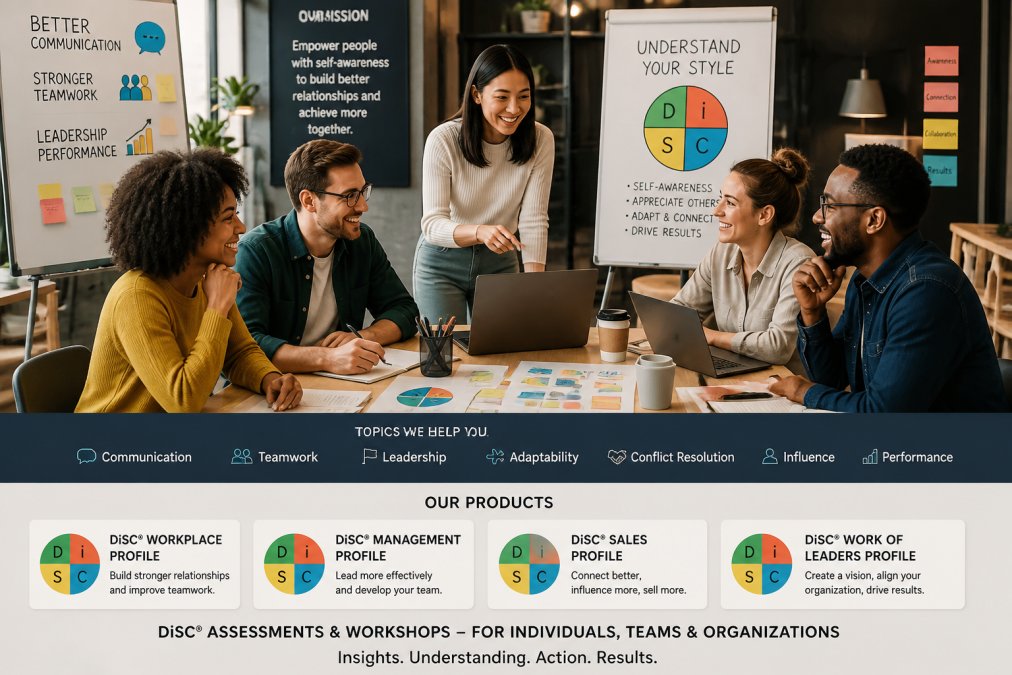
Colleagues collaborating at a whiteboard to build positive team culture through effective communication habits.
Start with these habits, which cost nothing and take under ten minutes each:
- Open meetings with a one-line check-in. Each person states their focus for the day.
- Write before you meet. Ask people to post updates in writing first. Discussion gets sharper when everyone has read the same thing.
- Close the loop on questions. If someone asks something in a channel, someone owns the answer by end of day.
- Replace “any questions?” with “what’s unclear?” The second question gets real answers.
A common mistake is treating communication as a personality trait. It is a set of behaviors, and behaviors can be practiced.
How to Foster Psychological Safety at Work Without a Single Off-Site
Psychological safety is the shared belief that you can speak up, admit a mistake, or disagree without being punished (What People Get Wrong About Psychological Safety). It is the strongest predictor of whether a team learns from its errors.
You build it through small, repeated signals from leaders:
- Admit your own mistakes first. A manager who says “I got that wrong” gives everyone else permission to do the same.
- Thank people for bad news. When someone flags a problem early, say thank you before you say anything else.
- Separate the person from the problem. Critique the work, not the worker.
- Never punish a question. If a question gets a sigh, questions stop.
Watch out: psychological safety dies quietly. One public dressing-down in a team meeting can undo months of good habits, so address it fast and in private.
For teams working remotely, our guide on how to foster psychological safety in remote teams goes deeper into the specific routines that hold up across time zones.
Using a DiSC Assessment for Teams to Decode Communication Styles
A DiSC assessment for teams is a behavioral tool that maps how people prefer to communicate, decide, and handle conflict. It sorts behavior into four styles: Dominance, Influence, Steadiness, and Conscientiousness. Understanding these individual tendencies provides a foundation for deeper collaboration, which can be further refined by applying practical team cohesion tips to bridge the gap between different personality styles.
The value is not the label. It is the shared language. When a team knows that one colleague prefers direct, bottom-line updates and another needs time to process before responding, small friction points disappear.
Here is how to use it without the usual failure mode:
- Frame it as preference, not personality. DiSC describes behavior, not worth.
- Share results openly. Everyone posts their style and their communication preferences.
- Translate it into requests. “I do best when you send the agenda the day before” beats a general discussion of styles.
- Revisit it. Refer back to the profiles in meetings, not just on the day of the assessment.
At Your Life’s Path, we offer the official DiSC® assessments, including the Workplace, Management, and Sales profiles, so teams can apply the same language across roles.
Recognition, Feedback, and Shared Goals That Fit Into a Normal Workweek
Recognition fails when it depends on a quarterly ceremony. It works when it is small, specific, and frequent, and when it is designed so the same three people do not collect all the praise.
Try these patterns, each of which fits inside an existing meeting or message thread:
- Specific praise, publicly, with the behavior named. “The way you handled that client call saved us a week” lands better than “great job.” Name the behavior, the impact, and the person, in that order.
- A two-question weekly feedback loop. Ten minutes, one question each way: what should I keep doing, and what should I change? Rotate who goes first so it does not become a manager monologue.
- Shared goals, visible and owned. Post the team’s top three goals where everyone sees them, and tie each person’s work to one of them. A goal nobody can trace their work to is a goal nobody owns.
- Milestone notes, not parties. A short written note marking a completed project costs nothing and gets remembered longer than a catered lunch.
Keep recognition from becoming a popularity contest
The most common failure mode is that recognition flows to the loudest or most visible people. Counter it deliberately:
Take The Official DiSC® Assessment Online Now! →
- Rotate the recognizer. Ask a different teammate each week to call out one contribution in the team channel. Peer-to-peer recognition spreads further than manager-to-report praise.
- Recognize the invisible work. Explicitly ask for shout-outs for unblocking, documentation, onboarding help, and behind-the-scenes coordination, the work that rarely gets noticed.
- Track who gets recognized. Once a month, scan the recognition channel. If the same names repeat, ask who is being missed and why.
Make feedback a routine, not an event
Feedback works best when it is normal, not rare. Teams that give feedback weekly stop treating it as a confrontation. Two habits make that happen:
- Separate appreciation from improvement. Appreciation names what worked; improvement names what to change. Mixing them in one sentence muddies both.
- Close the loop. When someone acts on feedback, say so. “You tried the new agenda format, here’s what changed” proves feedback leads somewhere.
Tie goals to the everyday work
Shared goals only strengthen culture when people can see their own work in them. At the start of each week, ask each person to name the one goal their current task supports. If they cannot, either the goal is too abstract or the task is misaligned, both are worth fixing before the next planning cycle.
A common mistake is treating recognition and feedback as HR programs. They are daily behaviors, and they compound when they are small and repeatable.
Building Team Culture Across Remote and Hybrid Teams
Remote culture does not happen by accident, and it does not require a virtual happy hour every Friday. It requires deliberate, low-effort routines that respect time zones, schedules, and different levels of comfort on camera.
What actually works:
- A shared channel for non-work updates. Small wins, photos, and quick notes build connection without a scheduled event. Keep it optional and low-pressure, forced fun reads as work.
- Onboarding buddies. Pair every new hire with a peer for their first month. New hires who have one person to ask questions settle in faster and ask for help sooner.
- Rotating meeting roles. Give different people the facilitator role each week. It spreads ownership and builds confidence without requiring anyone to present.
- Async-first defaults. Record updates, write summaries, and protect focus time. Async habits give quiet contributors a way in that live meetings do not.
A phased rollout that does not overwhelm the team
Do not launch every routine at once. A three-phase rollout gives habits time to stick:
- Weeks 1-2: Baseline. Pick two routines, one communication habit and one connection habit, and run them exactly as written. Ask the team what is working after two weeks.
- Weeks 3-6: Add ownership. Introduce rotating facilitators and onboarding buddies. Assign one owner per routine so nothing depends on the manager remembering.
- Week 7 onward: Review and prune. Keep what people actually use. Drop anything that has become a checkbox. A smaller set of habits that survive beats a long list that fades.
Make participation accessible and optional
Accessibility is not a nice-to-have; it is what makes the routines survive contact with a real team:
- Offer camera-optional and async alternatives. A written update should count the same as a spoken one.
- Rotate meeting times. If one time zone always gets the bad slot, the same people always miss out.
- Caption and record. Recorded updates help people who process better in writing or who work across schedules.
- Respect different personalities. Not everyone wants to share personal updates in a group channel. Offer a one-to-one alternative.
Troubleshooting when participation drops
Low participation is a signal, not a failure. Work through these in order:
- Check the ask. If a routine takes more than ten minutes or requires preparation, simplify it.
- Check the owner. A routine with no named owner quietly dies. Assign one.
- Check the signal. Ask two or three people privately what would make the routine worth their time. Adjust based on what they say, not what you assume.
- Check for forced fun. If people are participating to avoid looking bad, the routine is doing more harm than good. Make it genuinely optional and see who returns.
For new remote hires specifically, our collection of virtual team building exercises for new remote hires gives you ready-to-use options that take minutes, not hours.
A Simple Framework to Measure Culture Progress
You cannot manage what you never check. But you also do not need a heavy survey program. A light, repeatable check works better than an annual deep dive nobody reads.
Here is a simple framework we recommend:
|
What to Check |
How Often |
Signal to Watch |
|---|---|---|
|
Speaking-up comfort |
Monthly pulse |
Are quiet people contributing? |
|
Feedback frequency |
Monthly |
Are people giving and getting feedback? |
|
Recognition spread |
Monthly |
Is praise going to more than one person? |
|
Goal clarity |
Quarterly |
Can each person name the top goals? |
|
New-hire settling |
Per hire |
Do new hires have a go-to person? |
Keep the pulse to five questions or fewer. Ask the same questions each time so you can see trends. Share the results with the team, including what you plan to change.
A common mistake is measuring culture once and filing the report. The point is the trend line, not the snapshot. If you are choosing tools for this, our guide on how to choose the right culture assessment walks through the selection criteria.
Bringing DiSC Into Your Team’s Everyday Routine
An assessment that lives in a drawer changes nothing. The teams that get value from DiSC use it weekly, in small ways.
Practical ways to keep it alive:
- Add a style note to meeting agendas. Each facilitator states their style and how they like to run the session.
- Use it in conflict conversations. Ask both parties what they need to feel heard before you solve the problem.
- Reference it in feedback. Tie feedback to communication preferences, not character.
- Run short refreshers. A fifteen-minute session once a month keeps the language fresh.
Your Life’s Path makes this easier with EPIC sub-accounts for administering assessments across a team and the Catalyst platform for ongoing learning. You can set up a free EPIC sub-account to manage profiles. For managers who want to go further, the DiSC Management profile gives newly promoted leaders a concrete starting point.
Watch out: do not use DiSC results to sort people into fixed categories. The moment it becomes a label people are stuck with, the tool stops helping.
Most teams do not need another event on the calendar. They need a handful of habits that repeat every week, plus a way to see whether those habits are working. That is how team culture gets stronger without a single off-site.
At Your Life’s Path, we help teams build that foundation with official DiSC® assessments, free EPIC sub-account setup, and the Catalyst platform for flexible facilitation. Our specialized profiles for management, sales, and leadership give every role a shared language for how they work best. Get started with Your Life’s Path and turn everyday behaviors into a culture your team can measure.
Frequently Asked Questions
How can you improve company culture without team building events?
Focus on daily habits instead of one-time gatherings. Set a standing 15-minute weekly check-in, rotate who leads it, and publish a short recap so everyone sees decisions. Pair that with a simple recognition routine, such as a Monday message naming one specific contribution. These repeatable practices cost little time and build team culture through consistency rather than spectacle. Leaders should model the behavior first, because shared values only stick when managers practice them in ordinary meetings.
What are low-cost ways to strengthen team culture?
Most culture-building costs time, not money. Start a peer recognition channel, run a rotating skill-share during lunch, and publish a short weekly update on priorities and wins. Use a DiSC assessment for teams to give people shared language for how they communicate, then apply it in meetings. None of these require a venue, catering, or travel budget. The return shows up in fewer miscommunications and stronger employee engagement, which supports retention over time.
How do you build team culture in a remote or hybrid environment?
Remote culture depends on visible communication and predictable rhythm. Keep cameras optional but conversation deliberate: open meetings with a two-minute check-in, document decisions in a shared space, and rotate meeting times so no time zone always loses. Managers should hold short one-on-ones and ask about workload and blockers, not just deliverables. Psychological safety grows when people see leaders admit mistakes and respond well to bad news in writing.
How can DiSC assessments help improve team dynamics?
DiSC gives teams a shared, nonjudgmental vocabulary for behavior. Each person learns their primary style and how it affects communication, decision speed, and conflict. Teams then agree on practical adjustments, such as sending written context before a fast talker calls a meeting. Your Life’s Path provides official DiSC assessments with EPIC sub-account administration and the Catalyst platform, so HR teams can run profiles across departments and revisit results in everyday conversations rather than treating the report as a one-time event.
