

Table of Contents
- 1. Streamlining the Recruitment Process
- 2. Improving Employee Retention Rates
- 3. Enhancing Team Dynamics and Collaboration
- 4. Identifying Leadership Potential
- 5. Reducing Employee Burnout and Supporting Mental Health
- 6. Boosting Workplace Morale and Engagement
- Understanding Behavioral Assessment Tools for Employees
- Best Practices for Behavioral Profiling Implementation
Last Updated: August 13, 2026
Top 10 Benefits of Behavioral Profiling in the Workplace
Behavioral profiling has become a cornerstone of modern workplace strategy, helping organizations move beyond resume-based hiring and surface-level team assessments. At Your Life’s Path, we understand that understanding how people work transforms hiring decisions, team dynamics, and organizational performance. The top 10 benefits of behavioral profiling in the workplace extend far beyond initial hiring; they reshape how teams communicate, retain talent, and build sustainable competitive advantage.
This article explores concrete ways behavioral assessment tools for employees drive measurable improvements across recruitment, retention, leadership development, and workplace culture. Whether you’re an HR manager struggling with communication breakdowns, a sales leader looking to boost team effectiveness, or an executive seeking to improve cross-departmental collaboration, the evidence is clear: behavioral profiling works when implemented strategically.
1. Simplifying the Recruitment Process
Behavioral profiling fundamentally changes how organizations identify candidates who will succeed in a role. Instead of relying solely on credentials and interview impressions, structured behavioral assessment tools reveal whether a candidate’s natural work style aligns with job demands and team environment.
When hiring managers understand the behavioral profile of top performers already in a role, they can screen candidates against that benchmark. A sales role might require high dominance and extraversion; a data analyst position might favor patience and formality. Candidates matching these profiles experience faster onboarding, higher early engagement, and lower first-year turnover.
Behavioral profiling removes subjective bias from hiring decisions by providing objective data instead of inconsistent impressions. This consistency reduces costly mis-hires and accelerates time-to-productivity.
Define the behavioral profile of your top 3 performers in each role first. This becomes your hiring benchmark; candidates falling outside this profile often struggle regardless of credentials.
2. Improving Employee Retention Rates
Retention problems often stem from misalignment between job demands and employee behavioral style, not compensation alone. An employee with high patience may burn out in a fast-paced sales environment. A highly dominant personality may feel constrained in a role requiring consensus-building.
Behavioral profiling reveals these mismatches early. When organizations understand each employee’s natural work style, they can adjust role expectations, team assignments, and management approaches to reduce friction and increase engagement. Employees who feel their work style is understood and accommodated stay longer and report higher job satisfaction.
The strongest retention tool isn’t always a raise, it’s role alignment. Behavioral profiling helps identify when an employee is in the wrong seat, allowing reassignment before frustration builds.
3. Enhancing Team Dynamics and Collaboration
Teams fail not because members lack skills, but because they don’t understand how to work together effectively. A highly dominant personality may steamroll consensus-oriented colleagues. Someone with high patience may feel frustrated by fast-moving teammates who skip details.
Behavioral profiling creates a shared language for these differences. When team members understand their own behavioral style and each other’s, they stop interpreting differences as problems and start using them as strengths. A team needs both the big-picture visionary and the detail-oriented executor.
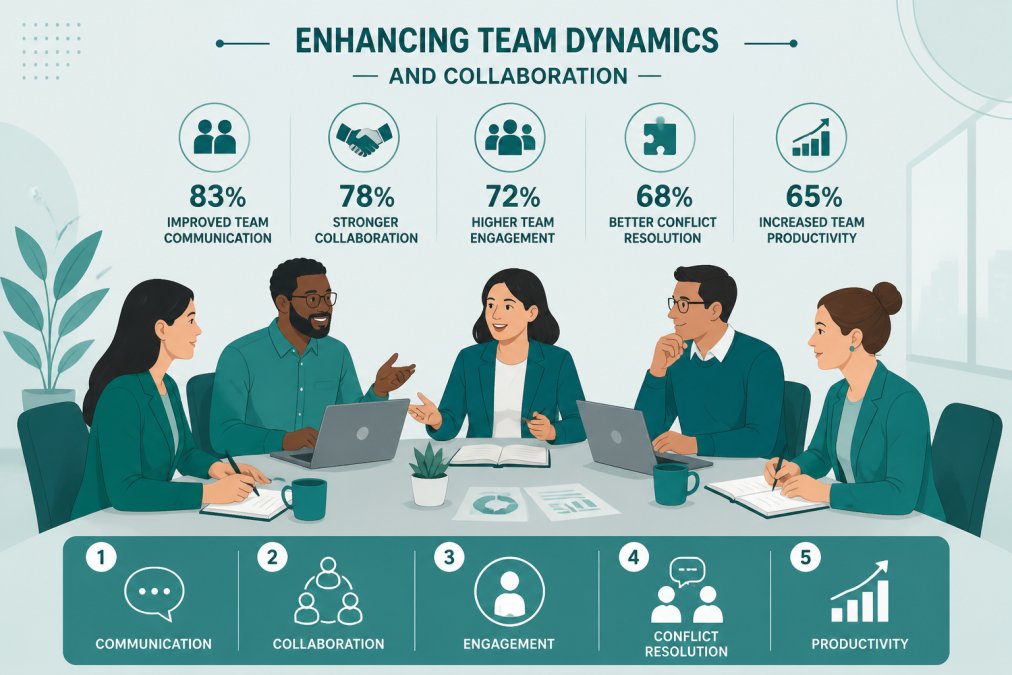
Organizations implementing behavioral profiling report measurable improvements in cross-functional collaboration. Teams that understand behavioral diversity make better decisions, challenge each other productively, and assign tasks based on who will actually enjoy doing them.
4. Identifying Leadership Potential
Not every high performer makes a good leader. Someone excelling as an individual contributor may lack the patience and people orientation that leadership requires. Behavioral assessment tools help organizations identify true leadership potential rather than promoting based on tenure or technical skill alone.
Organizations can identify strong individual performers lacking leadership behavioral traits and keep them in roles where they excel, while simultaneously identifying emerging leaders whose behavioral profiles predict success. Leadership development becomes more targeted, with coaching tailored to each leader’s behavioral strengths and gaps.
5. Reducing Employee Burnout and Supporting Mental Health
Burnout stems from sustained misalignment between job demands and personal behavioral style. An employee with high patience working in a chaotic, constantly-changing environment experiences chronic stress. Someone thriving on variety and autonomy feels trapped in a rigid, structured role.
Behavioral profiling helps organizations identify these misalignments before they escalate to burnout. When HR teams understand each employee’s behavioral profile, they can flag risk factors and adjust management approaches accordingly. Employees who feel their natural work style is respected report lower stress and improved overall well-being, translating to fewer sick days and higher engagement.
6. Boosting Workplace Morale and Engagement
Morale suffers when employees feel their contributions aren’t valued or their work style isn’t understood. A highly detail-oriented employee feels invisible when the organization celebrates only big-picture thinkers. A relationship-focused person feels disconnected in a purely task-driven culture.
Behavioral profiling shifts organizational culture toward appreciation of diverse work styles. When leadership understands and values behavioral diversity, recognition and advancement opportunities expand beyond one narrow profile. Employees who feel their natural strengths are recognized stay longer, contribute more discretionary effort, and actively build positive workplace culture.
Understanding Behavioral Assessment Tools for Employees
Behavioral assessment tools come in several forms, each measuring different aspects of workplace behavior. The most common frameworks include DISC (Dominance, Influence, Steadiness, Conscientiousness), the Big Five personality traits, and role-specific behavioral measures.
DISC assessments measure four primary behavioral dimensions: Dominance reflects how directly someone approaches challenges; Influence captures social orientation and persuasiveness; Steadiness indicates patience and consistency; Conscientiousness measures attention to rules and accuracy. Most DISC tools complete in 10-15 minutes and provide immediate insights into behavioral style.
The strength of behavioral assessment tools lies in their focus on work-relevant behaviors rather than clinical diagnoses. When selecting tools, organizations should prioritize validation research demonstrating correlation between assessment results and actual job performance.
Best Practices for Behavioral Profiling Implementation
Successful behavioral profiling requires thoughtful implementation, ongoing communication, and integration into existing HR processes.

Start with leadership alignment. Ensure executive leadership understands the purpose and benefits. Leadership must model openness by completing their own assessments and discussing results, signaling that behavioral profiling is a tool for development and understanding, not judgment.
Define clear use cases. Determine specifically where behavioral profiling will add value: hiring, team building, leadership development, conflict resolution, or retention.
Train managers and HR teams thoroughly. Comprehensive training should cover how to interpret results accurately, avoid stereotyping, and use behavioral data to support employee development.
Communicate transparently about data and privacy. Employees need to understand what behavioral data will be collected, how it will be used, and who will have access.
Integrate with HRIS platforms. Behavioral profiling data should live in your HR information system alongside traditional employee records, enabling HR teams to analyze trends and refine insights.
Provide ongoing development, not one-time assessments. Behavioral profiling delivers lasting value when paired with coaching, development plans, and team workshops.
| Best Practice | Implementation | Expected Outcome |
|---|---|---|
| Leadership alignment | Executives complete assessments first and discuss results openly | Organization-wide buy-in and modeling of openness |
| Clear use cases | Define specific applications (hiring, team building, leadership) | Focused, high-impact implementation |
| Manager training | Comprehensive training on interpretation and ethical use | Accurate application and prevention of misuse |
| Transparent communication | Clear explanation of data collection, use, and privacy | Employee trust and reduced resistance |
| HRIS integration | Behavioral data integrated with HR systems | Data-driven insights and trend analysis |
| Ongoing development | Coaching and workshops paired with assessments | Sustained behavioral change and engagement |
Ethical Considerations and Bias Mitigation
Behavioral profiling carries real risks if implemented without ethical guardrails. The most significant risk is using behavioral assessments to exclude or limit opportunities for certain groups.
Mitigating this risk requires deliberate action. First, validate that your behavioral benchmarks actually predict job success. Second, avoid using behavioral profiling as the sole decision criterion for hiring, promotion, or performance management. Third, regularly audit your use of behavioral profiling for disparate impact. Fourth, ensure your behavioral assessment tool itself has been validated for fairness across diverse groups.
Integration with HRIS Platforms
Behavioral profiling data becomes powerful when integrated with your existing HR systems. Instead of storing assessment results separately, behavioral data should flow into your HRIS alongside hiring records, performance reviews, compensation, and development history.
This integration enables HR teams to analyze which behavioral profiles are concentrated in high-performing departments versus high-turnover departments. They can identify whether certain behavioral combinations predict management success in your specific organization and flag retention risks by identifying employees whose behavioral profiles suggest misalignment.
HRIS integration also simplifies administration. When a new hire completes a behavioral assessment, results automatically populate their employee record. The data-driven approach supports continuous improvement by testing whether employees whose behavioral profiles matched your benchmark are performing better, staying longer, and engaging more than those who didn’t match.
Long-Term ROI Metrics
Behavioral profiling delivers ROI across multiple dimensions, though measuring it requires defining clear metrics upfront.
Recruitment ROI: Track time-to-hire, cost-per-hire, and new hire retention rates.
Retention ROI: Compare voluntary turnover rates for employees in behaviorally aligned roles versus misaligned roles. For mid-level roles, a single prevented mis-hire often exceeds the cost of implementing behavioral profiling across a team.
Engagement and productivity: Measure employee engagement scores and productivity metrics before and after implementation. Teams with better behavioral alignment typically show measurable improvements within 6-12 months.
Leadership development ROI: Track promotion success rates for leaders identified through behavioral profiling versus promoted through traditional methods.
Conflict and collaboration: Measure cross-functional project success rates and internal customer satisfaction scores. Teams understanding behavioral diversity typically show measurable improvements in collaboration metrics.
Organizations should establish baseline metrics before implementation and track them consistently for at least 12 months before drawing conclusions about ROI.
Conclusion
The top 10 benefits of behavioral profiling in the workplace extend from hiring efficiency through long-term retention and engagement. When implemented thoughtfully, with ethical guardrails, manager training, and integration into existing HR processes, behavioral profiling transforms how organizations build teams, develop leaders, and foster culture.
Your Life’s Path provides official DiSC® assessments and specialized profiles including the DiSC Workplace Profile, DiSC Management Profile, and DiSC Sales Profile, all designed to help organizations understand behavioral drivers and improve workplace outcomes. With the EPIC platform for easy administration and Catalyst for flexible facilitation, behavioral profiling becomes accessible even for smaller organizations. Get started with Your Life’s Path and unlock the behavioral insights that drive measurable improvements in hiring, retention, leadership, and team performance.
Frequently Asked Questions
How does behavioral profiling improve team communication?
Behavioral profiling helps team members understand each other's work styles, communication preferences, and motivations. When employees recognize these differences, they adapt their approach to communicate more effectively. For example, a direct communicator paired with someone who prefers detailed context can adjust their messaging. This awareness reduces misunderstandings, speeds up decision-making, and creates a common language for discussing workplace challenges. Studies show organizations using behavioral profiling report measurable improvements in cross-functional collaboration and fewer communication-related conflicts.
What are the best practices for behavioral profiling in recruitment?
Best practices include defining the ideal behavioral profile for each role before screening candidates, using validated behavioral assessment tools for employees to ensure consistency, and combining assessment results with traditional interviews rather than relying on profiles alone. Train hiring managers to interpret results accurately and avoid bias. Document which behavioral traits correlate with high performance in your organization, then use those insights to refine future job descriptions. Ensure candidates understand how assessments are used and that results remain confidential. Regular audits help verify that your profiling process supports fair hiring and reduces unconscious bias.
Can behavioral profiling actually reduce employee turnover?
Yes, behavioral profiling can reduce turnover by improving job-role alignment and identifying flight risks early. When employees are placed in roles that match their behavioral strengths and work style, engagement and retention improve. Profiling also helps managers recognize when an employee is disengaged or stressed, allowing for timely intervention. Additionally, understanding team dynamics through behavioral insights helps prevent toxic relationships that drive departures. Organizations that use behavioral profiling for onboarding, team building, and manager coaching report lower turnover rates compared to those using traditional HR practices alone.
What is the difference between behavioral profiling and personality testing?
Behavioral profiling focuses on how people actually behave at work, their communication style, decision-making approach, and how they respond to stress or pressure. It's designed for workplace application and predicts job performance. Personality testing, like MBTI, categorizes broader personality traits and preferences but may not directly translate to workplace outcomes. Behavioral profiling is more targeted and actionable for hiring, team development, and leadership coaching. While personality tests provide self-awareness, behavioral assessments offer specific insights for solving workplace challenges like communication gaps, team conflicts, and performance issues.
Are there ethical concerns with using behavioral profiling at work?
Yes, ethical considerations include ensuring assessments are scientifically validated, transparent about how results will be used, and applied fairly across all employees. Organizations must protect data privacy and avoid using profiles to discriminate. Bias mitigation is critical, behavioral profiling should supplement human judgment, not replace it. Employees should understand the purpose of assessments and have the right to request feedback. Responsible implementation includes training managers to interpret results without stereotyping, regularly auditing for fairness across demographic groups, and using profiling to support development, not punish. Your Life's Path provides official DiSC® assessments designed with validation and ethical application as core principles.
[EXTERNAL_LINK: Society for Industrial and Organizational Psychology research on assessment validity | siop.org]
[EXTERNAL_LINK: Harvard Business Review article on behavioral diversity in teams | hbr.org]
[EXTERNAL_LINK: EEOC guidance on fair employment practices in hiring assessments | eeoc.gov]
This article was written using GrandRanker