Last Updated: November 21, 2026
Quick Summary
The most common team building mistakes are skipping clear objectives, forcing participation, overpacking the agenda, ignoring accessibility and budget trade-offs, and treating the event as a one-time fix. Avoid them by writing one measurable goal, surveying preferences anonymously, and scheduling follow-up before the event.
- Write one goal sentence before planning any activity, so you have something to measure.
- Cap the agenda at one substantial activity per half-day, plus breaks.
- Hold back a contingency line of roughly 10 to 15 percent of the total budget.
- Schedule a debrief at two weeks, a check-in at six weeks, and a ninety-day review.
- Choose two outcome measures before the event to prove what worked.
Table of Contents
- Why Team Building Fails Before It Starts
- Mistake 1: Skipping Clear Objectives and Defined Goals
- Mistake 2: Choosing Team-Building Activities for Work That Don’t Fit the Group
- Mistake 3: Forcing Participation and Ignoring Employee Preferences
- Mistake 4: Overpacking the Team-Building Workshop Agenda
- Mistake 5: Overlooking Accessibility and Inclusive Activities
- Mistake 6: Ignoring Budget Planning and Cost Trade-Offs
- Mistake 7: Treating Team Building as a One-Time Event
- Your Team-Building Activity Planning Checklist
- Using the DiSC Workplace Assessment for Teams in Workshops
- Frequently Asked Questions
Why Team Building Fails Before It Starts
Most team building fails before anyone walks into the room. The problem is rarely the venue or the snacks. It is the planning that happened, or didn’t happen, weeks earlier.
A leader books an event, announces it, and hopes for the best. Then engagement dips, people grumble, and the whole thing gets written off as a waste of a workday.
Below, we break down the eight most common mistakes to avoid when planning team building, plus a checklist you can run before you commit to anything. The gap between a session that lands and one that flops usually comes down to a handful of decisions made long before the event.
Mistake 1: Skipping Clear Objectives and Defined Goals
Team building without clear objectives is just a field trip. If you cannot finish this sentence in one line, you are not ready to plan: “After this event, our team will be better at ___.”
Vague goals kill good events. “Improve morale” sounds nice but gives you nothing to measure. “Reduce handoff delays between sales and support” gives you a target.
A common mistake is planning the activity first and inventing the goal afterward. Reverse it. Start with the workplace outcome you need, then pick the format that gets you there. If you want a starting point, our guide on using DiSC assessments to build high performing teams shows how a shared behavioral language turns a vague goal into a working plan.
Mistake 2: Choosing Team-Building Activities for Work That Don’t Fit the Group
The best activity on paper can still flop with the wrong group. A high-energy relay race lands well with a competitive sales floor and badly with a team of quiet analysts. Neither group is wrong. The activity is.
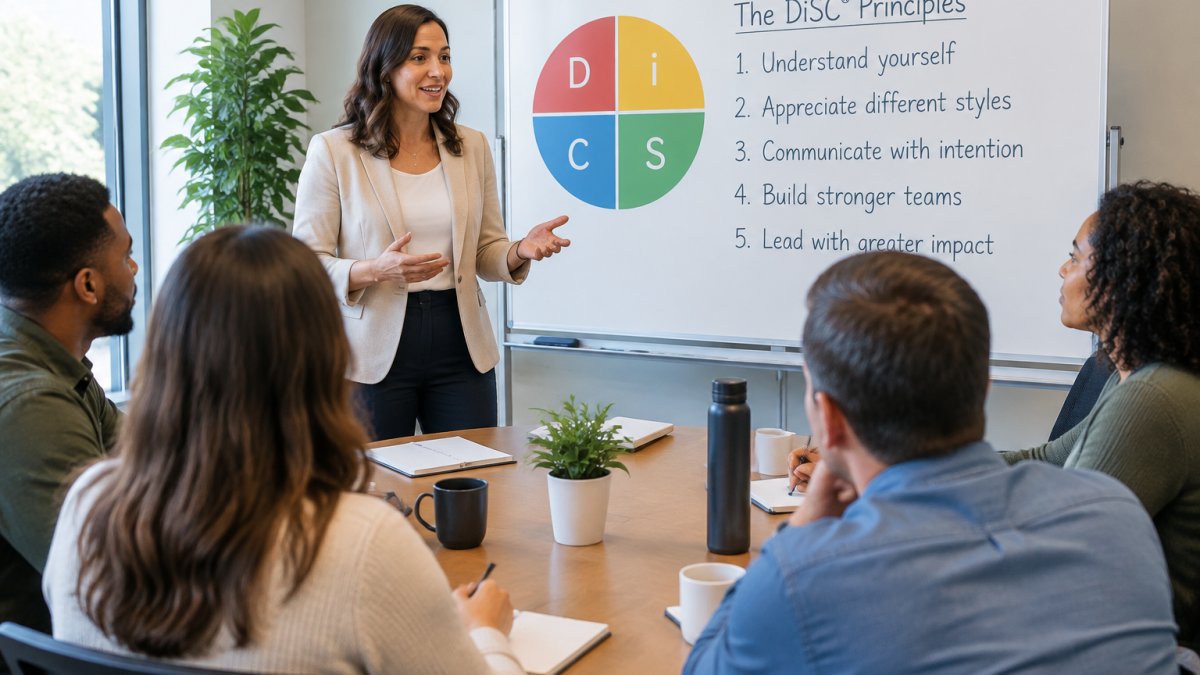
Infographic illustrating a disengaged team building session with employees distracted during a facilitator presentation
Match the activity to three things: team size, team culture, and the goal. A small team can do a facilitated workshop. A large department may need to be split across sessions.
What most guides miss is that fit matters more than novelty. A simple activity that suits the group beats a clever one that doesn’t. Ask a few people privately what they would actually enjoy, and let their answers shape the shortlist.
Mistake 3: Forcing Participation and Ignoring Employee Preferences
Mandatory fun is not fun. When people feel forced into an activity, they show up resentful, and resentment spreads faster than enthusiasm.
Voluntary participation does not mean low turnout. It means giving people a real choice about how they engage. Offer options: a hands-on activity, a discussion-based session, or a supporting role. Most people will pick something.
Watch out: the loudest objection in the room is not always the majority view. Check preferences with a short anonymous survey rather than reacting to one vocal holdout. If your team is spread across locations, our tips on hosting inclusive remote team workshops cover how to keep participation voluntary when people are dialing in.
Mistake 4: Overpacking the Team-Building Workshop Agenda
An overpacked agenda is the fastest way to waste a good plan. Three activities crammed into two hours means nobody finishes anything and everyone leaves tired.
Build your team-building workshop agenda around one main goal and one backup. Leave slack in the schedule. People need time to arrive, settle, and actually talk.
A workable rule: one substantial activity per half-day, plus breaks. If you have more ideas than time, save them for the next session. An ongoing process beats a single overloaded day.
Mistake 5: Overlooking Accessibility and Inclusive Activities
Accessibility is not a checkbox. If your activity requires physical stamina, a specific venue layout, or a schedule that excludes caregivers, some of your team simply cannot take part.
Start with the basics:
- Ask about accommodations in the same survey that covers preferences
- Choose venues with step-free access and quiet spaces
- Offer a non-physical option for every physical activity
- Avoid scheduling outside core hours where possible
Inclusive activities are not softer activities. They are better designed ones. For a full walkthrough, see our guide to planning an inclusive corporate retreat.
Mistake 6: Ignoring Budget Planning and Cost Trade-Offs
Budget gets treated as an afterthought, and that is where plans fall apart. The fix is not a bigger number. It is a framework you build before you book anything.
Start by writing down the main cost lines, because these are the ones that quietly blow up a plan:
- Venue or space, room rental, setup fees, and any minimum food-and-beverage spend the venue requires
- Food and drink, per-person catering, coffee service, and dietary accommodations
- Facilitation, an outside facilitator, or the internal cost of the manager’s prep time
- Materials and assessments, workbooks, activity supplies, and any behavioral assessment profiles
- Travel and logistics, parking, mileage, transit passes, and any overnight stays
Put a number next to each line before you commit to a date. A common pattern is that leaders budget for the venue and food, then discover facilitation and materials were never in the plan. Those two lines are usually where the real learning lives, so cutting them to protect the venue is backwards.
Trade-offs are normal, and the order you make them in matters. Spend more on facilitation and less on the venue. Skip the swag and put the money into a follow-up session. Downgrade the catering before you downgrade the debrief. The question to ask is not “what can we afford” but “what will actually change behavior,” and that question usually points money away from spectacle and toward structure.
Two practical guardrails. First, hold back a contingency line of roughly 10 to 15 percent of the total for the surprises that always show up, a room that needs AV rental, a last-minute headcount change, a facilitator’s travel. Second, get quotes in writing before you sign, because pricing depends on group size, format, and delivery, and verbal estimates drift. For current pricing, visit Your Life’s Path directly or request a quote. A written quote also makes it easier to spot where an offsite plan could unravel, a concern worth keeping in view with ʻOhana Getaways.
Watch out: a budget approved verbally in a hallway meeting is not a budget. Put the total and the five lines in a short document and get a written yes, or the event is the first thing cut when a quarter gets tight.
Mistake 7: Treating Team Building as a One-Time Event
One retreat does not fix a team. Treating team building as a one-time event is the mistake that undoes most of the others, because behavior change needs repetition and a single workshop fades within a month.
The teams that improve build follow-up into the plan from day one, and they measure it. Pick two or three measures before the event, write them down, and check them afterward. Concrete options that work for many teams:
- Participation, how many people took part voluntarily, and how many engaged in the follow-up sessions
- Feedback, a short post-event survey scored on whether people found the session useful and relevant to their work
- Collaboration signals, handoff delays, meeting attendance across teams, or a simple pulse question on how well the team works together
- Post-event behavior, whether the shared language from the session shows up in real conversations weeks later
You do not need all four. Two is enough to tell whether the event did anything.
Follow-up itself can be light, but it has to be scheduled, not promised:
- A short debrief two weeks later, on the calendar before the event happens
- A recurring check-in on the goals you set, tied to an existing team meeting rather than a new one
- A shared language the team keeps using, reinforced in one-on-ones
A practical cadence is a debrief at two weeks, a check-in at six weeks, and a review at the ninety-day mark against the measures you chose. That rhythm is what separates a session that sticks from one that becomes a story people tell about the time the team did an escape room.
Watch out: the most common failure here is measuring satisfaction instead of outcomes. People can enjoy an afternoon and change nothing. If your only post-event question is “did you have fun,” you have learned nothing about whether the event worked.
Your Team-Building Activity Planning Checklist
Use this checklist before you commit to any event. It maps each mistake to a fix and the impact you should expect.
|
Planning Step |
Mistake It Prevents |
Impact |
|---|---|---|
|
Write one clear goal sentence |
Skipping defined goals |
Gives you something to measure |
|
Survey preferences anonymously |
Forcing participation |
Higher voluntary turnout |
|
Match activity to team size and culture |
Poor activity fit |
Better engagement in the room |
|
Cap the agenda at one main activity |
Overpacked schedule |
People finish and connect |
|
Confirm accessibility and accommodations |
Excluding team members |
Everyone can take part |
|
Set the total budget before booking |
Cost overruns |
Protects the event from cuts |
|
Schedule a follow-up debrief |
One-time event trap |
Behavior change sticks |
|
Choose two outcome measures |
No evaluation |
Proof of what worked |
Run this list in order. Each step takes minutes and saves hours of rework.
Using the DiSC Workplace Assessment for Teams in Workshops
A behavioral assessment gives a workshop a shared language, and that language is what makes the learning stick. For most teams, the DiSC Workplace assessment is the right starting point. It shows each person their behavioral style and how that style interacts with colleagues under pressure.
A common approach is to send the assessment before the session, use the results to shape the agenda, and then debrief in a facilitated workshop. If you are running the session yourself, our step-by-step guide on how to facilitate a DiSC workshop for employees covers the full format, and this walkthrough on how to interpret DiSC results for team workshops will help you lead the debrief without getting bogged down in the report.
Free EPIC sub-accounts are available for administrators, so you can assign profiles, track completion, and manage groups in one place.
The bigger issue is what happens after the workshop. Catalyst is a platform for flexible facilitation and continued learning, so teams can keep building on the DiSC language between sessions.
Most teams do not need a bigger event. They need a plan that starts with a clear goal and keeps going after the room clears. That is where behavioral insight earns its place: it gives people a way to talk about how they work, not just a fun afternoon.
At Your Life’s Path, we provide official DiSC assessments and workshops built for exactly this. You get free EPIC sub-account setup to administer profiles, the DiSC Workplace profile as the recommended report for team workshops, and Catalyst for continued learning after the session. Take The Official DiSC® Assessment Online Now!
Frequently Asked Questions
What are common mistakes to avoid when planning team building?
The most frequent mistakes are skipping clear objectives, choosing activities that don’t fit the group, forcing participation, overpacking the agenda, ignoring accessibility and budget, and treating team building as a one-time event. Each one undermines team cohesion and wastes the budget you set aside. Start with defined goals, survey employee preferences, and build in follow-up so the workshop produces lasting workplace outcomes instead of a single good day.
How long should a team-building activity last?
Most workplace teams get the best results from a half-day session of three to four hours, including breaks. Full-day events work when you combine assessment debriefs with facilitated exercises, but they need a tighter agenda to avoid fatigue. Avoid scheduling activities longer than the group can stay engaged; a focused 90-minute session with clear objectives often beats a sprawling afternoon that leaves people drained and disengaged.
How do you choose a team-building activity for different personalities?
Use a behavioral assessment such as the DiSC Workplace profile to understand how your team members prefer to communicate and collaborate. Then pick a mix of activities: some that suit outgoing participants and some that let quieter members contribute in smaller groups. Offering voluntary participation and a couple of format options keeps different personalities engaged and reduces the risk of forcing anyone into an uncomfortable spotlight.
How do you keep team building going after a workshop?
Treat the workshop as the start of an ongoing process, not a one-time event. Schedule follow-up sessions, share feedback, and give managers a simple way to reinforce what the team learned. The Catalyst platform supports flexible facilitation and continued learning, and EPIC sub-accounts provide administration for your profiles.
